Advanced processing parameters adjustment and consistent thickness uniformity are key to high-quality PCR plastic packaging bags.
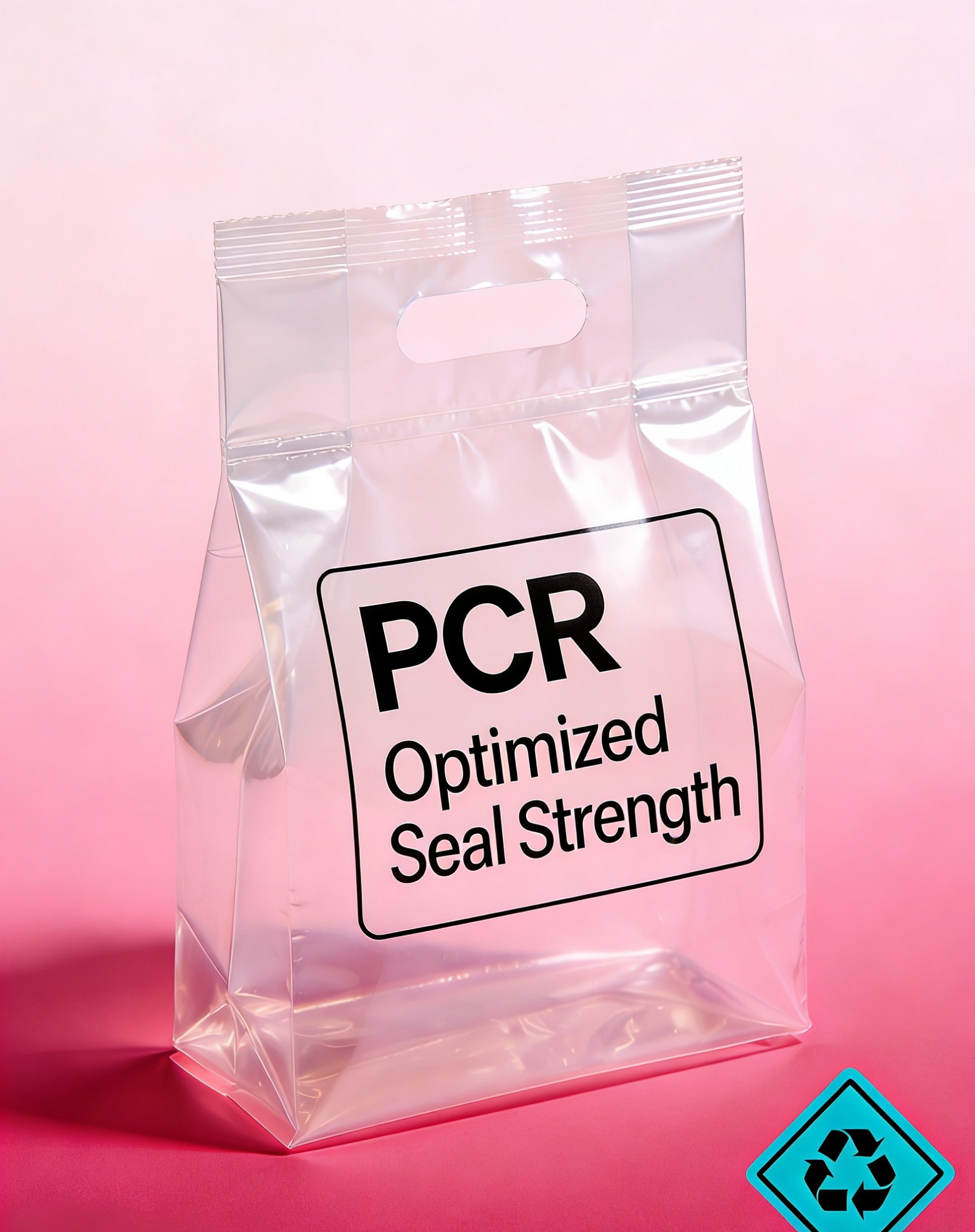
Processing Parameters Adjustment: The Key to Optimized PCR Plastic Packaging
As the industry shifts toward more sustainable solutions, PCR plastic packaging bags have become a staple in eco-conscious manufacturing. However, utilizing recycled resins introduces a new layer of complexity to film production—especially in terms of processing parameters adjustment and thickness uniformity.
1. Managing Variable Resin Behavior
Recycled content varies in melt viscosity, thermal resistance, and contamination levels. This makes processing parameters adjustment critical. Key parameters to manage include:
Properly calibrating these ensures that the film bubble remains stable and that downstream performance remains unaffected.
2. Thickness Uniformity as a Performance Indicator
Without proper thickness uniformity, packaging may fail to protect products or may compromise sealing. In PCR-based films, maintaining even thickness despite varying material properties is essential.
Manufacturers now rely on smart feedback systems that adjust temperature zones and bubble size in real-time. These systems enable stable production of PCR plastic packaging bags even with over 60% recycled content ratio.
3. Balancing Sustainability and Product Quality
While increasing recycled content ratio is desirable, it often leads to a trade-off in clarity, stiffness, or mechanical strength. However, with refined processing parameters adjustment, it’s possible to mitigate many of these issues.
Manufacturers who master this balancing act can produce eco-friendly films that meet customer expectations for quality and sustainability.
4. Looking Ahead: Smarter Extrusion for Greener Packaging
The next wave of sustainable packaging relies on AI-driven extrusion systems. These systems dynamically modify processing parameters adjustment to account for batch-to-batch resin variation. Combined with automated thickness control systems, they ensure every roll of PCR film meets exacting standards.



Final3D.png)
