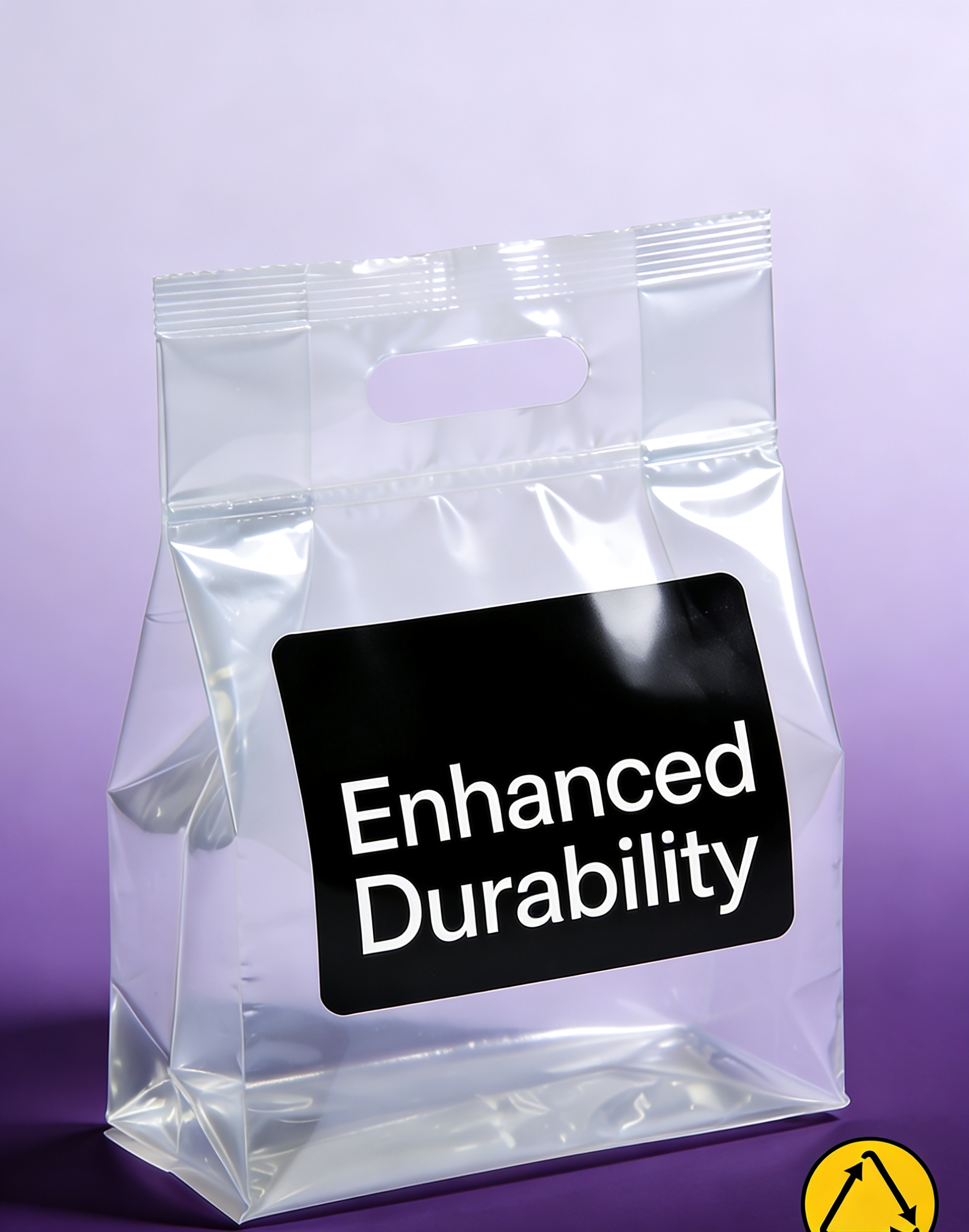
Boosting Recycled Content in Flexible Packaging Without Sacrificing Quality
Incorporating higher recycled content into flexible packaging, especially in PCR plastic packaging bags, is an environmental imperative. However, maintaining product integrity while increasing the recycled content ratio requires precise control of processing variables and a deep understanding of film dynamics.
1. Material Selection and Feedstock Optimization
The first step in boosting recycled content ratio is ensuring feedstock consistency. Post-consumer resins often vary in color, melt flow index, and contamination levels. To overcome this:
Choose recycled material with known provenance
Use filtration systems to remove contaminants
Implement inline blending systems for real-time resin mixing
These steps support consistent performance and enable higher PCR percentages in flexible packaging.
2. Processing Parameters Adjustment for Material Compatibility
Integrating recycled resin changes the extrusion behavior. Processing parameters adjustment becomes critical to accommodate the thermal and flow behavior differences. Key adjustments include:
Each change must be logged and tested to ensure that the process remains stable despite the material variance.
3. Advanced Control Systems for Thickness Uniformity
High-performance flexible packaging demands superior thickness uniformity, especially when used for food, cosmetics, or pharmaceuticals. Even minor deviations can result in compromised barrier properties or visual defects.
Technologies such as scanning gauge systems and AI-driven control algorithms allow continuous thickness monitoring and real-time corrections. For manufacturers focused on PCR plastic packaging bags, these systems are now essential tools.
4. Environmental and Market Impacts
Improved processing parameters adjustment and better control of thickness uniformity support a higher recycled content ratio without affecting the usability of the product. Brands benefit from reduced environmental impact, compliance with sustainability regulations, and a strong marketing narrative.
From food-safe PCR packaging to retail-ready PCR films, optimized processing helps maintain competitive advantage while aligning with global sustainability goals.



Final3D.png)
