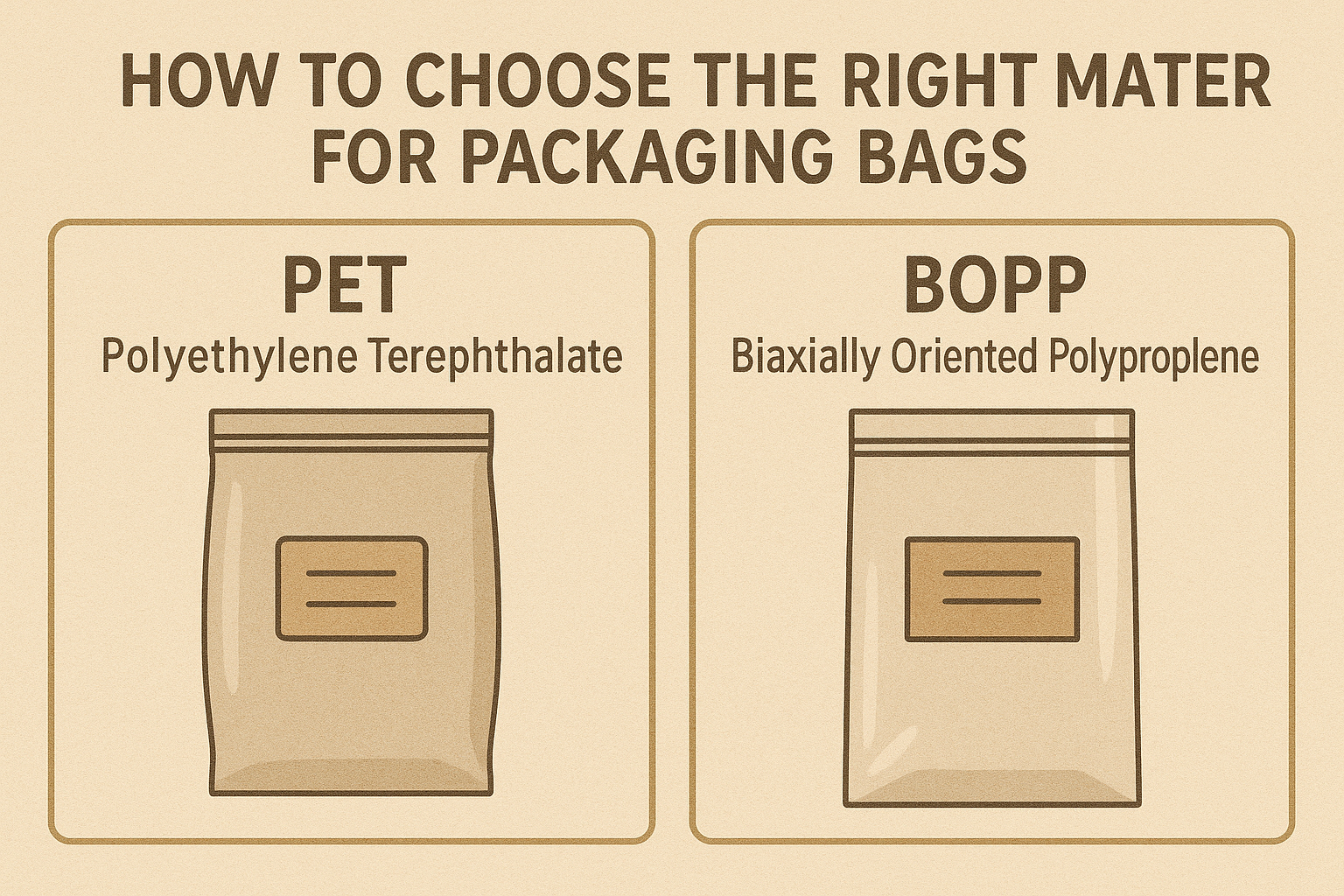
Selecting the right materials for packaging bags is crucial for ensuring product safety, shelf life, visual appeal, and compliance with food industry standards. Modern flexible packaging pouches can be designed with 2-layer, 3-layer, or 4-layer structures—each offering unique properties to match your product’s requirements. This guide will help you understand how to choose the best structure and material combinations for your packaging, with a focus on high barrier, food grade, and custom gravure printing needs.
Understanding the Structure of Packaging Bags
Most high-performance packaging bags are constructed from multiple layers, each providing specific protective, mechanical, and visual properties. Here’s how each layer contributes:
1. Outer Layer Options
PET (Polyethylene Terephthalate): Renowned for strength, clarity, and outstanding compatibility with custom gravure printing. PET is commonly used in both food and non-food applications due to its excellent printability and visual appeal.
BOPP (Biaxially Oriented Polypropylene): Offers high clarity and gloss, good moisture resistance, and is cost-effective for snacks and dry foods.
MOPP (Monoaxially Oriented Polypropylene): Provides flexibility and tear resistance, suitable for specialty pouches.
ALOXPET: PET with a thin aluminum oxide layer, combining transparency with advanced barrier properties.
KPET: Enhanced PET with improved barrier and mechanical strength, ideal for demanding products.
2. Middle (Barrier) Layer Options
VMPET (Vacuum Metallized PET): Delivers a metallic high barrier against oxygen, moisture, and light—perfect for sensitive products.
VMOPP (Vacuum Metallized OPP): Offers similar barrier and decorative effects, especially when paired with flexible outer layers.
AL (Aluminum Foil): Provides the ultimate barrier for maximum shelf life and product protection.
PA (Polyamide/Nylon): Adds puncture resistance and toughness, beneficial for heavy or sharp-edged goods.
EVOH PE: Combines Ethylene Vinyl Alcohol and PE for excellent gas barriers, essential for freshness in food-grade pouches.
PET: Can also serve as a middle layer to add strength and structure.
3. Sealant (Heat Seal) Layer Options
PE (Polyethylene): The most common food grade heat seal layer, delivering strong, flexible seals.
WHITE PE: Adds opacity for light-sensitive products.
CPP (Cast Polypropylene): Provides high clarity, smooth sealing, and is widely used for snacks and food packaging.
VMOPP: Offers resealability and visual differentiation for specialty products.
Multi-Layer Structures: 2-Layer, 3-Layer, and 4-Layer Pouches
2-Layer Structure:
Combines an outer layer (e.g., PET or BOPP) with a sealant layer (e.g., PE or CPP).
Advantages: Lightweight, cost-efficient, suitable for less demanding products or dry snacks.
Limitations: Lower barrier properties, limited shelf life for sensitive products.
3-Layer Structure:
Typically constructed from an outer layer (PET/BOPP/MOPP), a barrier middle layer (VMPET/AL/EVOH PE), and a sealant layer (PE/CPP/WHITE PE).
Advantages: Enhanced high barrier, longer shelf life, better mechanical strength, and increased consumer safety for food grade applications.
Ideal For: Coffee, tea, protein powders, nuts, and premium snacks requiring protection from oxygen, moisture, or light.
4-Layer Structure:
Incorporates a specialized combination (e.g., KPET/ALOXPET/VMOPP/AL/PA) for maximum barrier and strength.
Advantages: Highest performance in terms of barrier, puncture resistance, and mechanical stability.
Applications: Pharmaceuticals, export goods, sauces, liquids, and products exposed to harsh handling or shipping.
Choosing Materials Based on Product Needs
When deciding on your packaging structure, consider:
Barrier Requirements: For products needing maximum shelf life or protection, use 3- or 4-layer pouches with VMPET, AL, or EVOH PE.
Food Safety: Always ensure all layers, especially the sealant, are certified food grade.
Branding: Select PET or BOPP outer layers for sharp, durable results with custom gravure printing.
Sustainability: Consider recyclable structures or eco-friendly materials wherever possible.
Cost vs. Performance: Balance the level of protection with your product value and market positioning.
The Importance of Custom Gravure Printing
Custom gravure printing is key for high-impact packaging. With PET or BOPP as the outer layer, you achieve vibrant colors, detailed graphics, and long-lasting shelf appeal—important for brand recognition and regulatory compliance.
Conclusion
The choice between 2-layer, 3-layer, or 4-layer packaging bags depends on your product’s sensitivity, shelf-life requirements, and branding needs. Combining the right materials—PET, BOPP, ALOXPET, VMPET, AL, PE, and more—allows you to deliver high barrier, food grade pouches that protect your goods and promote your brand through custom gravure printing.
Work with your packaging supplier to tailor the material structure for optimal performance and value in your target market.
Related Product Terms, Services, and Customer Groups:
zipper bags, resealable pouches, stand-up pouches, PET bags, foil bags, custom pouches, vacuum bags, spout pouches, food packaging, snack pouches, coffee packaging, tea packaging, granola bags, protein powder pouches, flexible packaging, laminated bags, high barrier films, zipper closure, child-resistant bags, biodegradable pouches, recyclable pouches, compostable packaging, custom gravure printing, digital printing, brand packaging, food grade materials, FDA approved, BPA free, eco-friendly bags, clear PET pouches, transparent bags, pouch customization, flexible film, food preservation, consumer packaging, moisture protection, material suppliers, packaging manufacturers, OEM pouches, wholesale pouches
Tags (SEO Keywords): packaging materials, 2-layer pouches, 3-layer pouches, 4-layer pouches, PET, BOPP, MOPP, ALOXPET, KPET, VMPET, VMOPP, AL, PA, EVOH PE, PE, WHITE PE, CPP, high barrier, food grade, custom gravure printing, pouches



Final3D.png)
